
There's a specific moment on a construction site that costs more than people realize. The crew shows up at 7 am, coffee in hand, tools ready. The framer has a stack of scrap from yesterday to clear. The demo guy has a corner of sheetrock to take down. They all walk over to the dumpster, and it's full. Not mostly full. Full to the top rail, can't add anything without it tipping over. Now someone has to call the hauler. The hauler can't get there until after lunch. In the meantime, the crew either stops working, starts piling debris on the ground, or spends twenty minutes trying to compact what's already in the bin. None of those outcomes is neutral. Each one costs labor hours, and on a commercial build, those hours compound across every trade on site.
The fix isn't a bigger dumpster. It's a rotation schedule. A well-run commercial dumpster rental, used by Omaha contractors on high-volume jobs, treats waste hauling like concrete delivery. You don't wait until the pour is happening to order the mix. You schedule it. Construction logistics on the waste side follow the same logic. A roll-off dumpster rotation, done right, means the bin is never the bottleneck. The crew works, the bin fills, a fresh one arrives the same day the old one leaves, and nobody loses a morning to a logistics problem that could have been solved on a whiteboard the week before.
The version that works on commercial sites is even tighter. The hauler keeps a rotation calendar tied to your project phase. Every Tuesday and Friday, for example, an empty bin arrives automatically, the full one leaves, and nobody has to call. It's pre-scheduled infrastructure, not a reactive request. For a job that produces a steady volume of debris, this is the only way to run it without losing hours.
The better approach is phase-matched scheduling. Before the project starts, the superintendent walks through the schedule with the hauler and flags the heavy waste days. A demo kickoff may need a bin every 48 hours for the first week. Roofing teardown might need two bins on deck for a single day. Finish carpentry might stretch a single bin across two weeks. You plan the rotations around the build, not the other way around. The hauler knows when the truck is coming before your crew does.
A text-based ready-for-pickup system collapses all of that into about thirty seconds. The crew leads a single line of texts to the hauler. The hauler confirms a pickup window and dispatches the truck. There's no phone tag, no missed message, no waiting for a callback that doesn't come until 4 pm. The better haulers in the Omaha metro already run this way, but it's worth asking specifically before you book a job. If the answer is "call our office during business hours," that's a red flag for any project that runs at a pace tighter than residential.
This isn't just a convenience argument. It's a throughput argument. A hauler that's twenty minutes closer can realistically do two rotations in the time a farther hauler does one. On a busy week, that difference is the difference between your site running smoothly and your site running behind. For commercial builds, the hauler's address is part of the logistics math, not a detail you learn after booking.
For reliable scheduling and professional site coordination, call RMS Dumpsters to integrate expert container services into your next project.
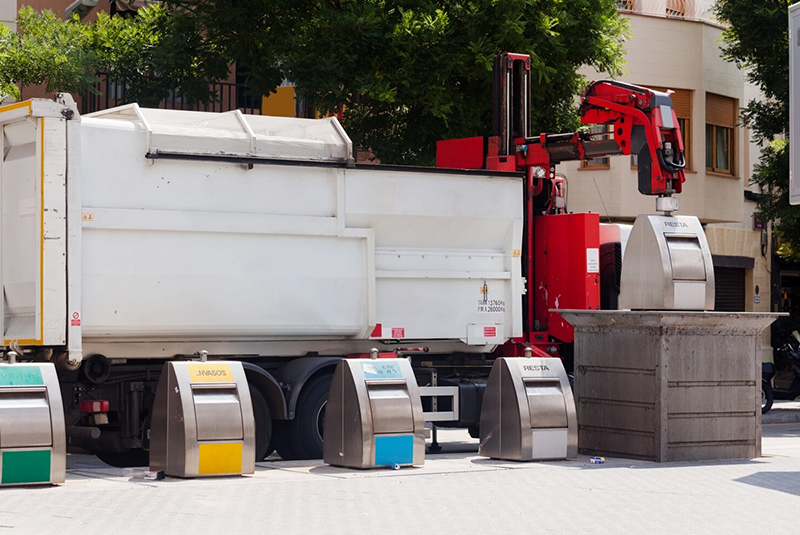
Featured Image Source: https://www.freepik.com/free-photo/recycling-truck-picking-up-bin-city_1489302.htm#fromView=search&page=1&position=2&uuid=6aff9d7a-d8d0-491d-b9f0-10df393c464c&query=dumpster+rotation+on+construction+site
The fix isn't a bigger dumpster. It's a rotation schedule. A well-run commercial dumpster rental, used by Omaha contractors on high-volume jobs, treats waste hauling like concrete delivery. You don't wait until the pour is happening to order the mix. You schedule it. Construction logistics on the waste side follow the same logic. A roll-off dumpster rotation, done right, means the bin is never the bottleneck. The crew works, the bin fills, a fresh one arrives the same day the old one leaves, and nobody loses a morning to a logistics problem that could have been solved on a whiteboard the week before.
Swap-Out
A swap-out is the simplest possible version of this. The hauler brings out an empty bin on the same truck that's coming to pick up the full one. The full bin rolls onto the truck, the empty bin rolls off, and the crew is back to work with maybe fifteen minutes of interruption. It sounds obvious once you hear it, but a surprising number of contractors still treat dumpster pickup and delivery as two separate events, which doubles the scheduling complexity and usually adds a day of lag.The version that works on commercial sites is even tighter. The hauler keeps a rotation calendar tied to your project phase. Every Tuesday and Friday, for example, an empty bin arrives automatically, the full one leaves, and nobody has to call. It's pre-scheduled infrastructure, not a reactive request. For a job that produces a steady volume of debris, this is the only way to run it without losing hours.
Waste Cycle
Construction waste doesn't come out evenly. Framing week is steady but lighter. A roofing tear-off can fill a forty-yard bin in a single day. Finish work barely produces anything. A rotation schedule that assumes constant output misses the peaks and leaves half-empty bins on site during quiet stretches, wasting rental time.The better approach is phase-matched scheduling. Before the project starts, the superintendent walks through the schedule with the hauler and flags the heavy waste days. A demo kickoff may need a bin every 48 hours for the first week. Roofing teardown might need two bins on deck for a single day. Finish carpentry might stretch a single bin across two weeks. You plan the rotations around the build, not the other way around. The hauler knows when the truck is coming before your crew does.
Trigger Pickups
Even on well-scheduled sites, there's always a bin that fills faster than expected. The question is how fast you can trigger a pickup when that happens. Most delays here aren't about trucks; they're about communication. Someone notices the bin is full, writes it on a sticky note, tells the super at the next tailgate; the super calls the hauler; the hauler gets the voicemail and calls back an hour later. That's half a workday gone for no reason.A text-based ready-for-pickup system collapses all of that into about thirty seconds. The crew leads a single line of texts to the hauler. The hauler confirms a pickup window and dispatches the truck. There's no phone tag, no missed message, no waiting for a callback that doesn't come until 4 pm. The better haulers in the Omaha metro already run this way, but it's worth asking specifically before you book a job. If the answer is "call our office during business hours," that's a red flag for any project that runs at a pace tighter than residential.
Geography Matters
Response time on a swap-out is mostly a function of distance. If the hauler's yard is 40 minutes from your site, a same-day pickup means the driver leaves at 10 am for a 2 pm arrival, assuming perfect routing. If the yard is ten minutes away, the same request gets handled before the crew takes their morning break. In the Omaha metro, yards in Crescent, IA, and along the Mormon Bridge corridor are within a few minutes of both downtown Omaha and Council Bluffs, which is why they tend to win on turnaround time compared to haulers farther out.This isn't just a convenience argument. It's a throughput argument. A hauler that's twenty minutes closer can realistically do two rotations in the time a farther hauler does one. On a busy week, that difference is the difference between your site running smoothly and your site running behind. For commercial builds, the hauler's address is part of the logistics math, not a detail you learn after booking.
Rotation Schedule
The simplest version of all this: put the dumpster rotation on the same calendar as concrete pours, inspections, and material deliveries. Not a separate system, not a post-it note in the trailer, not something the super remembers when he walks past the bin. A calendar entry, with a named contact, a confirmed truck window, and a phase note. Just as a concrete pour is scheduled around a rebar inspection, the bin rotation is scheduled around the waste volume from that week's work. A contractor running commercial dumpster service on a steady rotation usually finds that waste stops being the thing that blows up the schedule and starts being the least interesting part of the week.For reliable scheduling and professional site coordination, call RMS Dumpsters to integrate expert container services into your next project.
Featured Image Source: https://www.freepik.com/free-photo/recycling-truck-picking-up-bin-city_1489302.htm#fromView=search&page=1&position=2&uuid=6aff9d7a-d8d0-491d-b9f0-10df393c464c&query=dumpster+rotation+on+construction+site